Anna Berger · 16 September 2026
Mapping the Evolution of Rock Shelter Usage Across Different Historical Periods and Regions
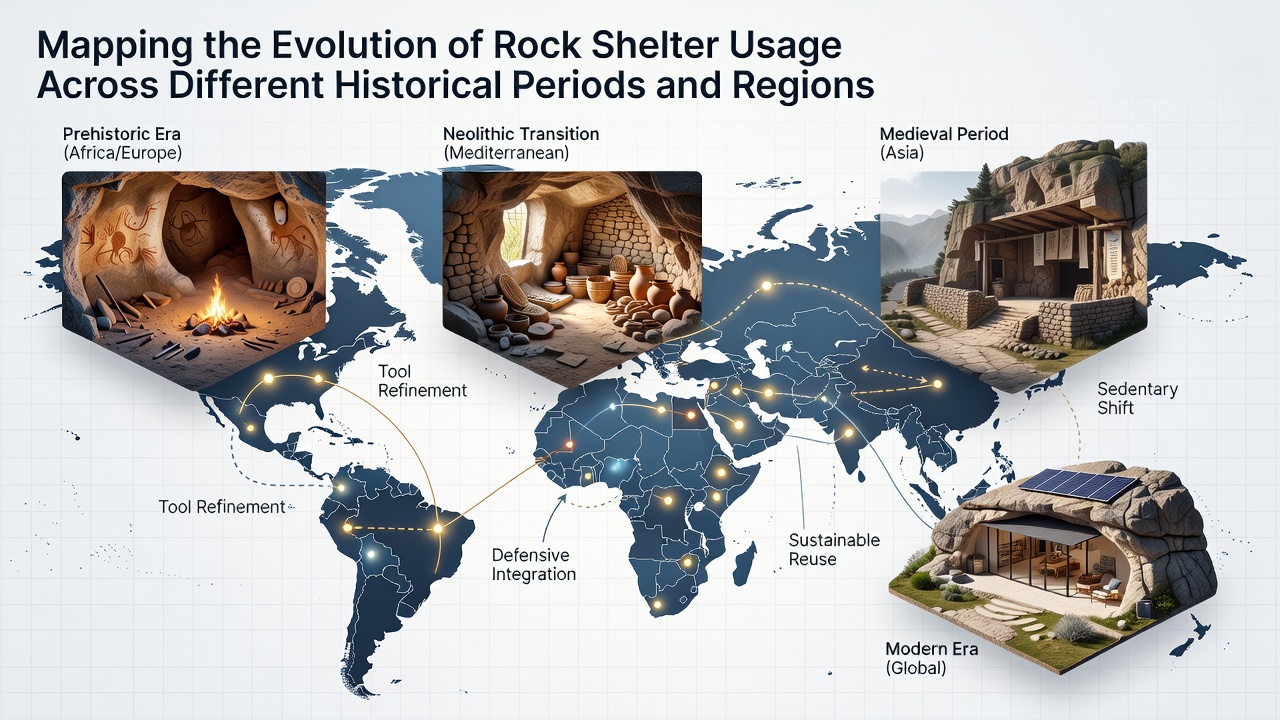
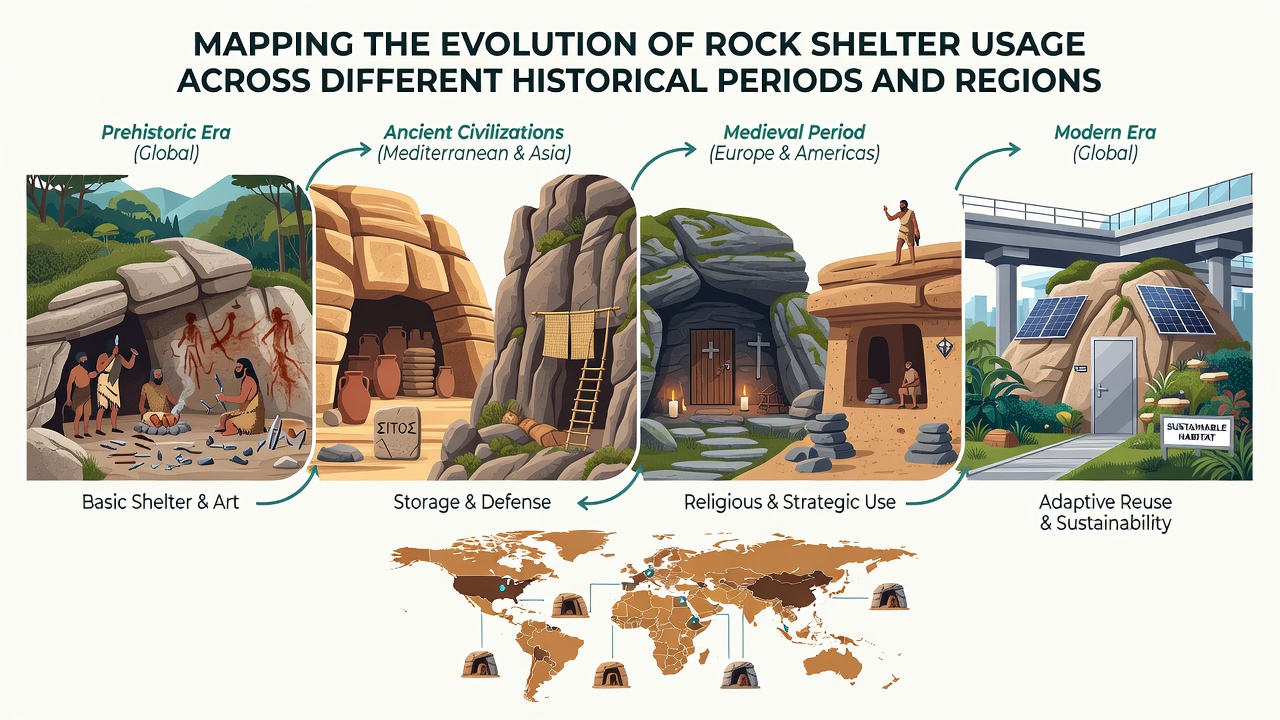
Rock shelters have served as significant locations for human activity across millennia, and researchers document their roles through archaeological evidence that spans continents and eras, while data from field studies reveal shifts in how groups utilized these natural formations for protection and other purposes. Evidence shows that early humans in the Paleolithic period occupied rock shelters in Europe and Africa for temporary habitation, and findings from sites like those in the Dordogne region of France indicate repeated seasonal use tied to hunting cycles. Studies from African locations such as the Blombos Cave area demonstrate that inhabitants employed shelters for tool production and symbolic activities as far back as 100,000 years ago, yet patterns differ when compared to Asian sites where similar structures supported gathering communities during comparable timeframes.
Prehistoric Foundations in Multiple Continents
Archaeological records trace the earliest documented rock shelter occupations to hunter-gatherer societies in the Americas and Australia, where evidence from the Paisley Caves in Oregon points to human presence dating around 14,000 years ago, and comparable data from Australian rock shelters like those in the Kimberly region show continuous occupation markers from at least 40,000 years ago. Researchers note that these locations often featured hearths and artifact clusters that suggest multifunctional spaces, while in South America sites along the Andes foothills reveal adaptations to high-altitude environments through layered sediment analysis. Observers note that climate variations influenced shelter selection, because groups in colder northern latitudes prioritized deeper overhangs for wind protection, whereas those in tropical zones focused on elevated positions to manage rainfall runoff.
Transitions During Ancient and Classical Eras
As societies developed agriculture and settled communities, rock shelter functions evolved in regions like the Mediterranean and Middle East, with evidence from Greek and Anatolian sites indicating their conversion into storage areas or temporary refuges during conflicts. Data from excavation projects show that in parts of China and India, similar formations hosted ritual practices during the Neolithic transition, and inscriptions found in some Indian rock shelters document their use as waypoints along trade routes. Those who study these periods find that Roman and Persian records mention rock shelters as strategic military positions, although usage patterns varied by local geology and available resources. In North Africa, Berber communities maintained long-term associations with rock shelters for herding activities, and carbon dating places some of these adaptations between 2000 BCE and 500 CE.
Medieval to Early Modern Shifts Across Regions
During medieval times in Europe, rock shelters occasionally served as hermitages or hideouts, while evidence from sites in the Iberian Peninsula and the Balkans reveals modifications such as carved niches for religious icons. In the Americas, indigenous groups continued practical applications, and studies of Ancestral Puebloan sites in the American Southwest document rock shelters integrated into cliff dwellings for both living quarters and granaries. Researchers mapping these developments across Asia report that in Japan and Southeast Asia, shelters supported monastic retreats or defensive outposts amid feudal conflicts, and pollen analysis from sediment layers provides details on surrounding vegetation changes that affected site viability. Data indicates that by the early modern period, European colonial expansions sometimes repurposed existing shelters in Australia and Africa for exploration bases, although indigenous groups retained traditional knowledge of their locations and seasonal utility.
Contemporary Research and Regional Documentation
Modern investigations apply advanced techniques such as LiDAR mapping and DNA analysis to trace rock shelter histories, and projects coordinated through institutions in Canada and Australia have cataloged thousands of sites with updated chronologies. According to information from the National Park Service, systematic surveys in the United States highlight protective measures that preserve evidence of continuous use from prehistoric through historic periods. In Europe, collaborative efforts under EU heritage frameworks track similar patterns in the Alps and Pyrenees, while African research initiatives focus on how climate change impacts shelter preservation in the Sahara and Rift Valley zones. Those examining Pacific island contexts note that rock shelters there often contain evidence of maritime adaptations dating to the last 3,000 years, and comparative studies reveal parallels with Andean highland usage in terms of elevation-based resource strategies.
Global databases now compile regional datasets that allow cross-continental comparisons, and findings indicate that rock shelter density correlates with geological features like limestone plateaus in many areas. Evidence from recent fieldwork in September 2026 updates some timelines for North American sites, confirming extended occupation sequences through refined dating methods, while parallel work in East Asia refines understanding of shelter roles during early dynastic periods. Observers note that these efforts rely on interdisciplinary teams combining geology, anthropology, and environmental science to build comprehensive maps of usage evolution.
Conclusion
Rock shelter usage demonstrates consistent human adaptation to natural landscapes over time, with documented variations across historical periods and geographic zones driven by environmental, cultural, and technological factors. Research continues to expand the mapped record through new technologies and international cooperation, providing clearer pictures of how these sites functioned from prehistoric origins through later historical phases in diverse regions worldwide.