Carlo Perry · 30 September 2026
Exploring Microhabitat Adaptations in Overhanging Rock Structures Through Soil Composition Studies
Understanding Overhanging Rock Structures
Overhanging rock structures create distinct environmental pockets where light, moisture, and temperature fluctuate sharply compared to open terrain, and soil composition studies reveal how these conditions drive microhabitat adaptations in plants, microbes, and invertebrates. Researchers measure pH levels, nutrient profiles, and organic matter content in soils sheltered by these formations, noting that reduced sunlight often leads to higher moisture retention while wind patterns deposit fine sediments that alter mineral balances over time. Data from geological surveys indicate that overhangs in sandstone and limestone regions trap particles rich in calcium and iron, which in turn influence root development and microbial activity beneath the rock edge.
Soil Composition Analysis Techniques
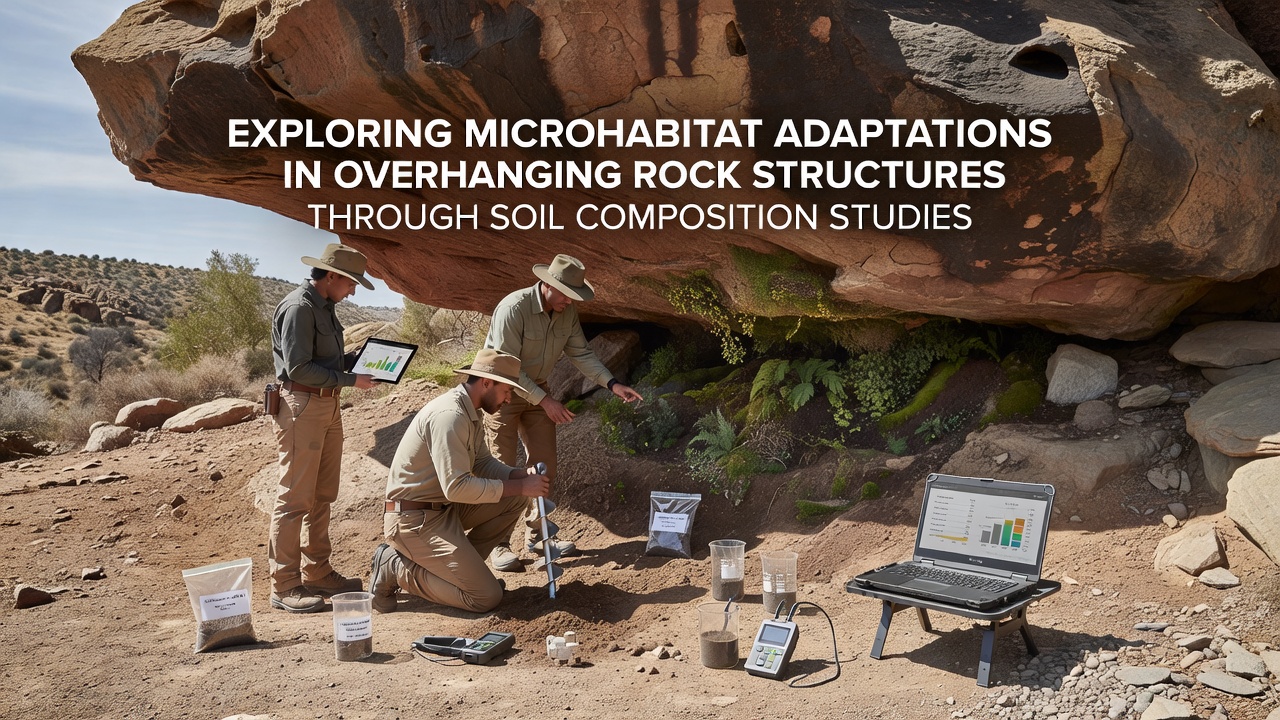
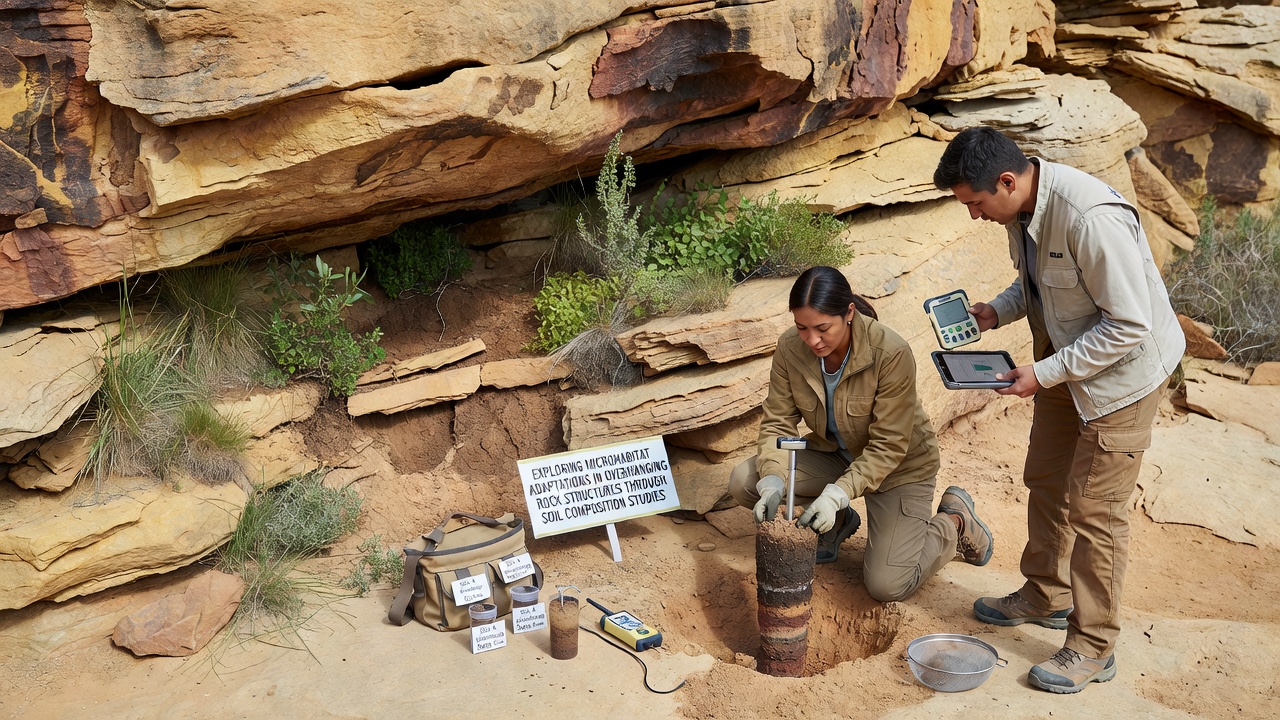
Scientists apply a range of laboratory and field methods to examine soil under overhangs, starting with core sampling that captures vertical gradients in texture and chemistry. X-ray diffraction identifies mineral types, while spectrometry quantifies trace elements such as potassium adn magnesium that support specialized lichen communities. Teams also track seasonal shifts in soil moisture using sensors placed at varying distances from the rock face, revealing how evaporation rates drop significantly in shaded zones. These measurements show consistent patterns across multiple sites, where organic carbon accumulates faster in protected soils than in exposed areas nearby.
One study revealed that particle size distribution changes abruptly within two meters of an overhang, with finer clays dominating closer to the rock because coarser grains wash away during rainfall events channeled by the structure itself. Such findings help map how microhabitats form layered communities, each adapted to narrow ranges of acidity and nutrient availability.
Adaptations Observed in Flora and Fauna
Flora in these microhabitats often develops compact root systems and drought-tolerant leaves that maximize water uptake from soils enriched by slow-decomposing leaf litter trapped under the overhang. Mosses and ferns exhibit elevated chlorophyll content in samples taken from high-moisture pockets, allowing efficient photosynthesis under low-light conditions. Invertebrates such as springtails and mites show behavioral adaptations, burrowing deeper during dry periods to reach layers where soil retains higher humidity levels.
Microbial communities shift in response to these soil profiles, with nitrogen-fixing bacteria thriving in pockets where pH remains near neutral due to limestone weathering. Researchers document increased fungal diversity in soils containing elevated organic matter, supporting nutrient cycling that benefits nearby plant species. These interactions create feedback loops where adapted organisms further modify the soil, stabilizing the microhabitat against external weather fluctuations.
Case Studies from Various Regions
Analyses conducted in arid zones of the southwestern United States demonstrate how overhangs in granite formations collect wind-blown dust high in silicates, fostering crustose lichens that tolerate extreme temperature swings. In contrast, studies from coastal cliffs in Australia highlight soils enriched by sea spray salts, prompting halophyte adaptations in grasses that grow only within the sheltered zone. European teams working in alpine regions have recorded similar patterns, noting that soil calcium content rises sharply beneath overhangs formed by glacial erosion, supporting calcicole plant communities absent from surrounding slopes.
Observers note that combining these regional datasets allows broader models of how rock structure orientation affects soil development, with north-facing overhangs in the northern hemisphere consistently showing cooler, wetter profiles than south-facing equivalents. Such comparisons underscore the role of aspect and geology in shaping adaptation strategies across continents.
Future Directions Including September 2026 Events
Upcoming research initiatives scheduled for presentation in September 2026 will integrate drone-based LiDAR mapping with soil sampling to track microhabitat changes over multi-year periods. These efforts build on existing work by incorporating climate projection models that forecast shifts in precipitation affecting soil moisture under overhangs. International collaborations between geological agencies aim to standardize sampling protocols, improving comparability of data collected from sites in North America, Europe, and Oceania. Preliminary reports suggest that refined soil composition metrics could help predict which microhabitats support rare endemic species as environmental conditions evolve.
Conclusion
Soil composition studies continue to illuminate the precise mechanisms through which overhanging rock structures generate and sustain microhabitats, with adaptations ranging from specialized root architectures to microbial community shifts documented across diverse geological settings. Continued data collection and cross-regional analysis will refine understanding of these systems, supporting conservation strategies that account for the narrow environmental tolerances observed in these sheltered zones.